How We Examine a Stone
An independent, documented record of your stone.
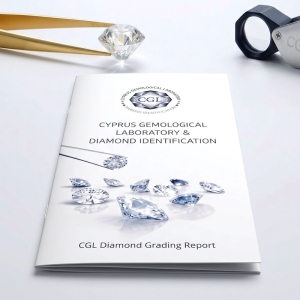
A Cyprus Gemological Laboratory (CGL) certificate records the identity and quality of a diamond or gemstone, based on examination in our laboratory by our resident gemologist.
For diamonds, the certificate confirms whether the stone is natural or laboratory-grown and grades it on the 4Cs: carat weight, cut, colour and clarity. For coloured gemstones, it identifies the stone and reports any treatments detected.
A certificate describes the stone’s gemological characteristics; it does not state a price. If you require a monetary valuation for insurance or estate purposes, CGL can prepare a separate, formal appraisal document.
Every certificate is signed, stored securely in our laboratory database and can be verified at any time through our online system.
Natural, laboratory-grown or imitation.
CGL determines whether a stone is a natural diamond, a laboratory-grown diamond or an imitation.
This distinction matters because the differences cannot be observed with the eye alone. A laboratory-grown diamond has the same chemical composition and appearance as a natural diamond, while imitations such as cubic zirconia and moissanite are different materials made to resemble diamond. Laboratory testing is the only definitive way to distinguish them.
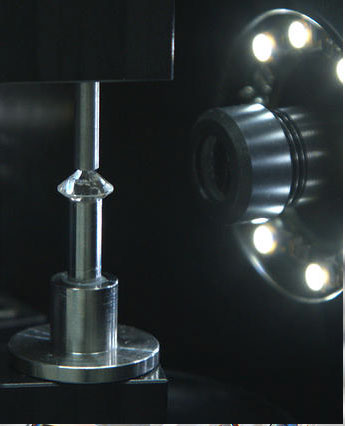
Testing relies on Raman spectroscopy, which analyses how laser light interacts with the stone to confirm its composition, alongside the laboratory’s other analytical instruments.
The result is stated clearly on every CGL certificate, providing clarity for buyers, sellers and insurers.
Graded against master stones of known colour.
Colour is one of the 4Cs, alongside clarity, cut and carat weight, that define a diamond’s quality.
At the Cyprus Gemological Laboratory (CGL), colour is graded by comparing each diamond against a set of master stones of known colour. Diamonds are always graded loose, as metal settings can reflect light and influence the colour perceived by the eye.
Colour grading scale (colourless to light yellow or brown):
D, E, F: colourless
G, H, I, J: near colourless
K, L, M: faint tint, usually yellow
N to R: light tint, visible to the naked eye
S to Z: tint, usually yellow to brownish, visible even when mounted
Fancy coloured diamonds are evaluated according to separate standards.
An examination of a diamond’s internal and surface characteristics.
Clarity describes the presence, size and position of a diamond’s natural characteristics: inclusions within the stone and blemishes on its surface.
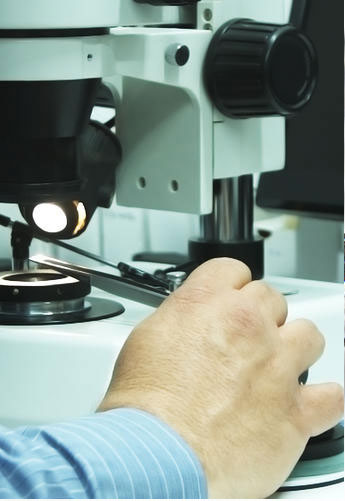
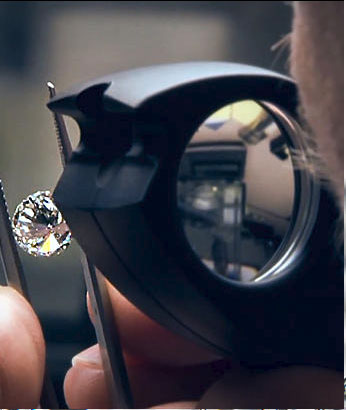
At the Cyprus Gemological Laboratory (CGL), each diamond is examined under a stereo microscope fitted with a digital camera, which records these characteristics.
Clarity grading scale:
FL, IF: flawless and internally flawless
VVS1, VVS2: very, very slightly included
VS1, VS2: very slightly included
SI1, SI2: slightly included
I1, I2, I3: included
Precise measurement of a diamond’s proportions.
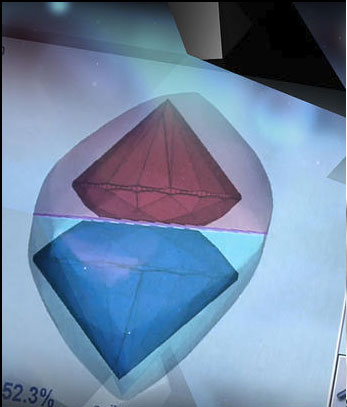
CGL evaluates diamond cut and symmetry with the UNOScope HD, an electronic grading system that combines a high-definition digital camera with high-speed measurement software.
The system measures round brilliant and many fancy-shaped diamonds against the standards used by leading laboratories, including GIA Facetware. It grades proportions and symmetry and detects extra facets.
Each evaluation records the diamond’s measurements, including weight, diameter, total depth, crown angle and height, pavilion angle and depth, and culet size.
How a diamond responds to ultraviolet light.
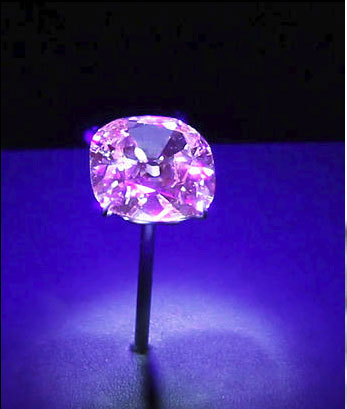
Some diamonds emit a visible glow, most often blue, when exposed to ultraviolet light. This reaction, known as fluorescence, is a natural characteristic of the stone and forms part of its documented identity.
At the Cyprus Gemological Laboratory (CGL), each diamond is examined in a dedicated ultraviolet chamber under both long-wave and short-wave light. We evaluate and record the intensity of the reaction using a standard five-step scale: None, Faint, Medium, Strong or Very Strong.
The fluorescence grade appears clearly on every CGL certificate.
A direct link between a stone and its certificate.
On request, the Cyprus Gemological Laboratory (CGL) can inscribe the certificate number of a diamond or gemstone on its girdle, the narrow outer edge of the stone, using the GEMScribe laser inscription system. The inscription is microscopic: invisible to the naked eye and readable under magnification.
This allows a stone to be matched to its CGL certificate at any time, which is valuable for identification, insurance and resale.
The same service is available for other inscriptions:
A personal message or special date
A serial number
A company logo or brand mark, for jewellers and the trade
Laser inscription is carried out on loose diamonds and gemstones only.